
Celebrating STEM Stories
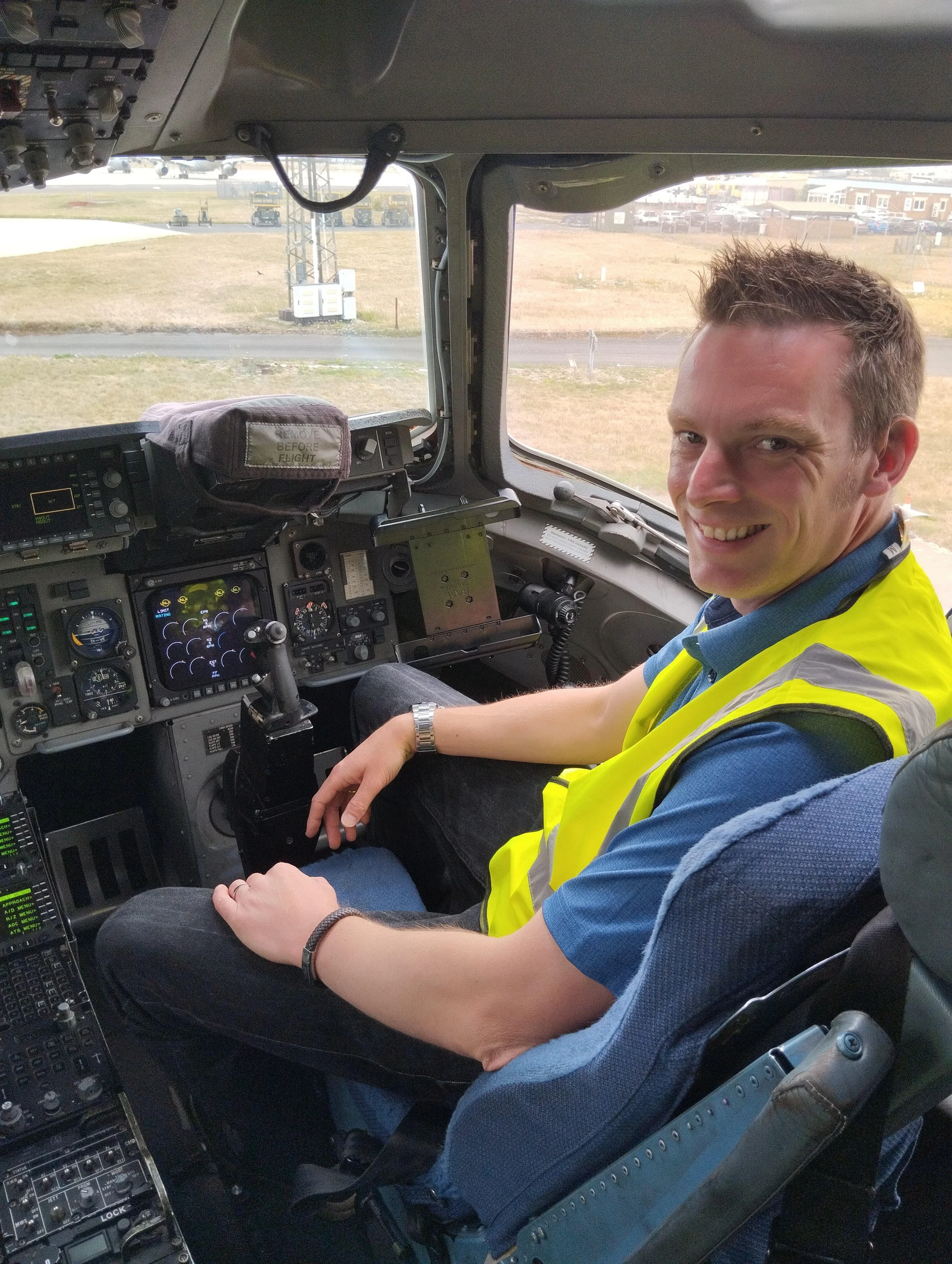
Henry Duke
Job Title: Senior Software Engineer
Neurodiversity: Autism & ADHD
What do you do? Why is STEM an important part of your life?
My name is Henry Duke, and I'm a software engineer. I have been interested in software and writing software since I was about 6, so around 1987. We had a ZX Spectrum 128 computer. My dad bought us a book on coding, and it was basically just pages and pages of BASIC code that we had to type into the computer.
We had to type all this code into the computer to try and create this game, and to this day I don't remember whether it worked or not. I just have very fond memories of being sat there, day after day after school with my dad. It was my first introduction to writing software.
I've always had an interest in science. It was one of my favourite subjects at school. I have always been interested in how things work.
How did you get started in STEM?
Computing wasn't an option when I did my GCSEs in the late 90s, so I took various other subjects. After my GCSEs, I started A-levels in Chemistry, Biology and History, but after the first term, I felt I wasn’t enjoying it so I decided to drop out. I took the rest of the year out of education and started a two-year BTEC in Computer Science at college in 1999.
After my BTEC, I was completely fed up and disillusioned with education. I didn't want to go to university just because it was “the next step”. I actually almost didn't finish my college course because two weeks before the final exams I felt I was completely done with it all. That was a bit of the ADHD coming out! All credit to my parents for pushing me to finish!
After the summer, I had a call from a small company that I'd done some work experience with when I was 14. They built electronic devices for programming microchips, but they also had a website, which was fairly new technology back then. They heard I had finished college and asked if I wanted to help build a new search feature for their website. I went to work for them for a couple of years. That was technically my first introduction to working in the software industry.
Once the search feature went live, the job changed, and I was responsible for keeping the database up to date. I got bored of that fairly quickly, and left to explore other avenues. I took a close protection training course, becoming a trained bodyguard and, while that didn’t lead to anything, I ended up working in a cinema for a couple of years. In 2005, I went travelling to the US and Canada for a few months. When I came back from travelling, I realised I was ready to go to university, although at that point I didn't know what I wanted to study. That Christmas I spent two weeks, eight hours a day, playing Xbox with a friend of mine. We literally just played hours and hours of Xbox, and in the new year I decided I was going to go and study computer games. I searched UCAS and found a degree in Computer Graphics, Vision and Games at Aberystwyth University. When I went for my interview, they told me that the results from my BTEC by themselves would not normally be enough for me to take the course. However, because I had taken time out of education and I was applying for uni because I wanted to go, they were able to give me an unconditional offer.
I feel that going to university as a mature student (I was 25 when I started) allowed me to get significantly more out of the experience than I otherwise would have done. Having had some real-life experience before starting meant that I really wanted to be there and I had the confidence to challenge things, ask questions and generally experience more of university life. My degree also included an industrial placement year, during which I was fortunate enough to work with Sony at their games studio in Cambridge.
After I graduated in 2010, I went travelling in the US and Canada for six months. When I came back to the UK, I got myself a job as an office administrator. Not long after, I met the woman who eventually became my wife. She came to the office Christmas party with me, and she was the one who asked me why I was working as an office admin when I had a degree in software. The honest answer was that I had done the degree because it was something I wanted to study - I had never really considered using it to get a job! Six months later, I got my first proper job in the software industry and my career has grown from there.
What is your favourite thing about working in STEM?
I love the problem-solving aspect of software engineering. I really enjoy being given a problem, looking at it from many different angles, and trying to figure out the best solution. It really feeds my autistic side, examining a problem from all different aspects and perspectives, and trying to come up with the best solution. I also have the opportunity to work alongside all the different stakeholders of a project (the rest of the technical team, the programme management and the customer) to fully understand the scope and requirements of the project, which my ADHD really enjoys!
Often, it's about trying to find the simplest solution. That's something I've learned over the years, and something I try to pass on to junior engineers. Generally they'll be looking for the most creative solution, and how they can use the latest technology. There's a principle we use called KISS - “Keep It Simple”. The simpler the solution, the easier it will be to maintain going forwards. When you come back to look at it in six months' time, you'll still understand it.
Sometimes you do need that sort of out-of-the-box thinking in order to be able to look at a problem and go, “Okay, so I could do it this way, but actually there might be a more efficient way.” And working with the juniors, they're fresh out of university. I've been out of uni for nearly 16 years, and things have moved on. I learn most about new technologies from the juniors I work with, and I'm always open. A mentor-mentee relationship is always a two-way relationship.
What impact has your neurodiversity had on your life, and on your work?
I’ve said for years and years that I'm probably on the spectrum. My daughter got an EHCP in Year 1, she's got full-time one-to-one support, and she's on the pathway for ASD and ADHD diagnosis.
Through the process of trying to understand her better, my wife and I sat down in 2022 and watched the Paddy and Christine McGuinness documentary: Our Family and Autism. They have autistic children and Paddy was struggling to understand it, so they made this documentary helping Paddy to understand autism better.
During that documentary, Christine is diagnosed as autistic. My wife and I finished watching it, and I just sort of looked at her and said, “I'm autistic.” It was that single moment of clarity and realisation. In that instant, I was able to forgive myself for so much from my past. I suddenly understood myself in an entirely new way. Growing up, there were so many times when I was angry at myself. I would ask myself, “Why did I do that? Why did I think that? Why did I say that?”, but viewing them through the lens of autism, they just made sense.
Whilst I don't have a diagnosis, I'm also totally deaf in my right ear. Just as I don't need a piece of paper to tell me that I'm deaf - I just know that one ear doesn't work - I don't need a piece of paper to tell me that I'm autistic. I just am. It just makes my life make sense.
Since then I've sort of come to the realisation I also have ADHD. When I used to joke that I was probably on the spectrum, one of the arguments against it was that I love go-karting, I used to race cars, I love going to theme parks, and I love travelling. All of this stuff might not sit with autism alone, but exploring neurodiversity as a wider concept I've come to the realisation that I'm also ADHD.
I don't consider my neurodiversity a disability, I prefer to see it as operating differently. I've been able to harness my neurodiversity to make me more efficient at work. When I'm at work, I'll try and have meetings in the morning because my ADHD side doesn't mind doing the chatting, and a lot of the communication. Then after lunch, I will knuckle down and get on with the sort of autistic software side.
I've always been very good at visualising things in my mind. I use it to relax, to help me get to sleep and to organise my thoughts. There are times when my autistic side is in control and I need to keep my ADHD side busy, so I have this sort of soft play in my head that ADHD can just go and play in. On the other side if I am operating in ADHD mode, my autistic side has this big red leather armchair where it can go and sit and read a book - most often I use the complete works of Sherlock Holmes, as this was a book that I read cover to cover during my teens as a way of coping with secondary school. Understanding that there are these two distinct parts to myself has allowed me to work with both of them so that, as far as I can, neither feels neglected.
Finally, everything I have learned since my realisation, and knowing that my daughter's going to grow up in a world where support and acceptance of neurodiversity is making so much progress is just a wonderful feeling. Already the support she is having at school is lightyears beyond anything that was available 35 years ago. It's still not ideal, still not perfect, and it's still not completely configured for neurodiverse people, but it's definitely moving in the right direction. There's huge steps forward, and I'm really excited to see where things go from here.
Is there anything that you wish other people knew about autism or ADHD?
I think everybody's experience is different. If you’ve met one person with a neurodiverse condition, you have met one person with a neurodiverse condition. It's a spectrum, and everyone is going to have a different profile.
The fact that it can be invisible as well. Some of my wife's friends have said, “Henry doesn't seem autistic. He doesn't look autistic.” I respond with, “Well, let me tell you about planes or Formula 1…” A plane can fly over, especially a military one, and I can tell you what it is without seeing it, just from the engine noise.
Autism looks different for everybody.
One thing I'd like people to know about neurodiversity is that it's okay to talk about it. If someone's telling you about their neurodiversity, listen to their perspective. Don't try and put them in a box just because they say they're autistic, or they're ADHD, or they're dyslexic. Listen to their experience and understand their own perspective, because it's going to be different to everybody else's.
Are there any kind of skills or attributes that you feel really help you in your work?
There is a stereotype of software engineers not being particularly social, preferring to spend time alone or work in small teams with other engineers. While this isn’t completely accurate, the job does attract neurodiverse people because computers operate logically and in a predictable manner, the rules are fixed and understandable. Many software engineers are not people who would choose to go and talk in front of a room of people. Because of my ADHD side, I am equally comfortable talking on a technical level with other engineers, discussing high-level project management matters with management, and handling interactions with customer teams.
When I started at Boeing, I was put on a project building a data analytics platform, where due to historical factors, there was quite a lot of tension between the software engineering team and the customer. I worked very hard with the customer team over my first few months to gain their trust. I spent a lot of time working to understand their data and understand what they wanted to do with it. In doing that, I was able to earn the trust of the team and use my deep understanding of the data to build a system that did exactly what they wanted. Ultimately, my neurodiversity allowed me to do my job better - my autistic side enjoyed learning the data, and my ADHD side allowed me to have that communication, that back and forth with the customer.
In terms of my skills, communication has been key. Teamwork as well, because I consider the customer part of the team. A holistic team includes the customer, the development team, the project managers, everybody is part of the team, and being able to communicate with all stakeholders is invaluable.
Every job I've ever had, I've learned something and taken something from it. When I was at university, I worked on the security team at the student union. We all looked after each other. We used to socialise together as well, it was a really good team environment. The job at the cinema as well, we would work such crazy hours that the only people we used to socialise with was each other, because we were all in the same boat.
So to answer the question, I would say that teamwork and communication are key for me.
What are your top tips for a neurodivergent young person who's interested in STEM?
Believe in yourself. Everybody is capable of whatever they put their mind to.
Be open to opportunities, you never know where your next opportunity will come from. Network, meet people, talk to people. Just be aware of who's around you, and be aware of what opportunities are around you.
Before I got the job at Boeing, I was working in the centre of Bristol. I was on the train on the way home, and the train was absolutely packed. There's one seat left, next to me. This lady sits down and starts chatting to me, and before I got off the train 40 minutes later, she said, “Oh, if you ever want a job at Boeing, let me know. Here's my card, just send me your CV.” So I did, she uploaded it onto the company recruitment system, and I had an email a couple of days later with some jobs I might be interested in. I applied for one, and I got the job at Boeing.
It was completely random that she happened to sit down on the only seat left on the train and we got chatting. So yeah, just be open to opportunities, and believe in yourself. Believe that you can achieve what you want to achieve, and don’t worry if you don’t know what you want to do with your life - I have never had a plan and I’ve done alright this far.